Introduction
Of all the ways to catch fish, using a float has to be one of the most agreeable. The simple rule that if the float dips or goes under you have a bite. This is a rule anyone can understand. Which is why the float is so enthralling to youngsters and is perhaps why so many of us caught our first fish, float fishing.
No deeper understanding is needed to catch a few fish, and for some this is enough. For them fishing is an activity enjoyed on odd occasions. For others the quest to catch more fish and the need to better understand how, drives them to delve deeper into the float.
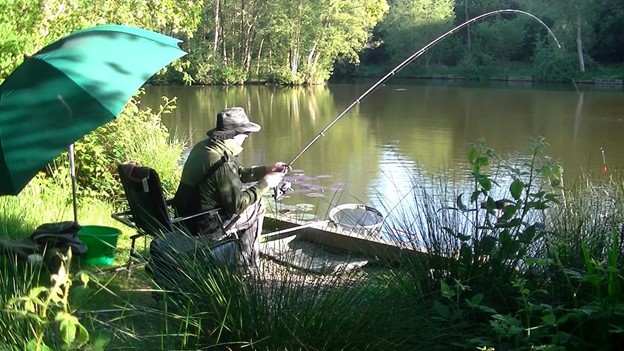
Float fishing is at the delicate, sensitive end of angling methods. Small hooks, small baits and shy bites are most closely associated with floats. In general you do not need a lot of tackle to go float fishing. Ideal you would need a Float Fishing rod of 12ft – 14ft length. A fishing reel loaded with nylon monofilament line 4lb – 8lb breaking strain , hooks of size 12’s to size 18’s depending upon what baits you are going to use, some lead splitshot of various sizes and a selection of floats.
For a waggler float set up refer to the following diagram:
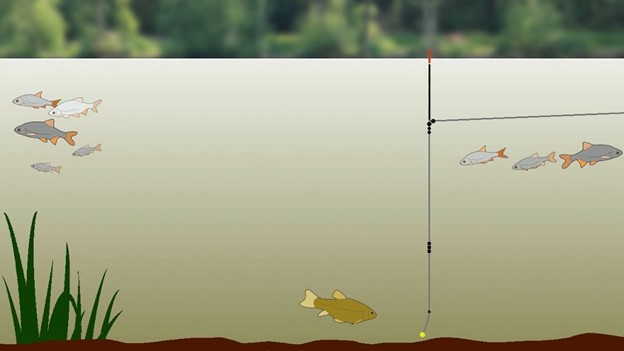
Waggler floats are fixed to the line at the bottom end. Main line is threaded through the float eye with a split shot pinched on either side to hold the float in place. Split shot is then added on the hook side of the float until two thirds to three quarters of the floats capacity is reached. Add a No.4 shot eight inches from the hook as a tell tale shot. Add a bulk of shot further up the line to make up the remaining capacity of the float. The bulk shot must be a greater distance from the tell tale than the tell tale is from the hook. This helps to prevent tangles. This describes a typical straight waggler float rig, designed to quickly get the bait down to the bottom to catch Carp, Tench, Perch and Roach.
Float drift
Wagglers are fixed to the line at the bottom end for two reasons. Firstly to hold the line below the surface to help avoid surface drift. If the rig is allowed to drift pulling the bait with it, the fish will be put off of eating the bait as it is behaving unnaturally. Secondly, having most of the weight around the base of the float helps to ensure the float will fly correctly on the cast.

The tell tale shot is the most important. Any disturbance of this shot by a fish will result in an indication at the float. The bulk shot is there to not only get the bait down, but also to reduce the risk of tangles on the cast. The bulk also helps reduce drift by acting as an anchor in a lower layer less effected by surface drift.
Bait Presentation
Whenever you fish with a float, you know exactly where your bait is. Whether fishing against weed beds, features, or trotting down a river, the bait is always under the float. Which makes positioning a bait in the same spot, time after time, very easy.
Fish do not always feed on the bottom. For different reasons at different times of the year, fish can be near the surface or in mid-water. A float can be used to set the bait at a particular depth, not just on the bottom.
With different shotting patterns, the bait can be allowed to sink slowly or race down to the lake bed. On a river, a float can be used to control the speed at which the bait is washed downstream or halted altogether. There are many ways to control and offer a bait when float fishing.
Versatility
There is a float for every swim on just about every water. From specialist floats like the Drift Beater and Slider to the common peacock Waggler. There are very few situations where a float cannot be used. The versatility of float fishing makes it an essential method of fishing and well worth getting to know.

Waggler Floats
Although simple in design, the straight Waggler has caught countless fish. It can be used on lakes, ponds and (depending on conditions) rivers. The straight Waggler really is an important part of any angler’s kit.
For shy biting fish, the insert Waggler has greater sensitivity and is able to show both lift and dip bites.
The Driftbeater is a special waggler designed to work in strong winds and strong water drift. It also has a reputation for it’s exaggerated lift bites which have accounted for many Tench.
River Floats
The reigning king of river floats is the stick float. Made famous by many anglers on the UK river match fishing scene, the stick has become a firm favorite. Like the Waggler, there are very few anglers who don’t own a stickfloat.
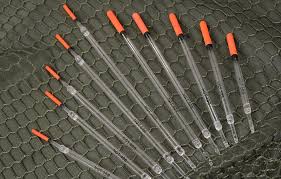
Range of Crystal Wagglers
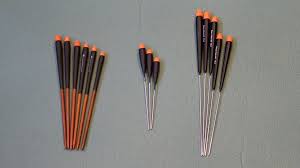
Range of Stick Floats
Loaded and unloaded floats
A loaded float is simply a float with some of it’s weight carrying capacity already built into the float. Traditionally these were heavy floats used for long distance fishing. Having some of the weight built into the float improves accuracy and distance when casting, but also simplifies the shotting pattern.
Nowadays the range of loaded floats has increased to include small Wagglers. These smaller loaded floats have the advantage of using simple shotting patterns, Drennan Crystal Wagglers are a good example.
Shotting patterns
Much of float control is determined by the shotting pattern (the positioning of split shot on the line to weight the float correctly). The choice of shotting pattern can hold the bait hard on the bottom, stop a float drifting or allow the bait to sink slowly down through the water.
Every split shot placed on the line has a job to do. Understanding what every shot does and why it is there allows complete control over the rig.
The most important shot on any float rig is the tell tale shot. This is last shot on the line, the one closest to the hook. This shot is the first one a taking fish will disturb. As soon as the tell tale shot is moved, the float should report the presence of a fish at the surface. The exact position and size of the tell tale has a big effect on bite registration.
Float control
River anglers are masters of float control. A good river man can dictate how fast a float and bait flow downstream, but can also cause the bait to rise and fall in the water.
For the still water angler float control is as equally important. On a lake, the last thing you want is for your float to drift on the wind moving your bait out of the swim. Presentation and controlling the way your bait behaves to the fish will make a big difference to how many you catch.
YouTube Videos
To give you a better idea of how to go about waggler fishing please take the time to review a couple of video’s included below. These videos has been made by Dennis Saunders a member of the AFCAA and provide a great introduction to waggler fishing.
Dennis has set up a terrific YouTube Channel and has a large number of different videos to help introduce you to all the various methods of coarse angling and even has several videos on how to make tackle and prepare bait. Feel free to subscribe to his channel as he regularly releases new materials for you to watch.
 Australian Federation of Coarse Anglers Association